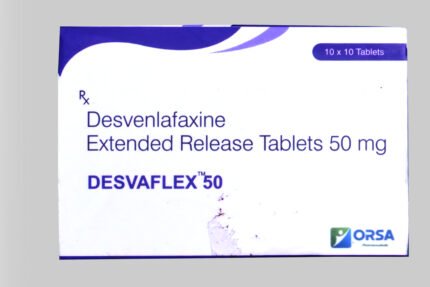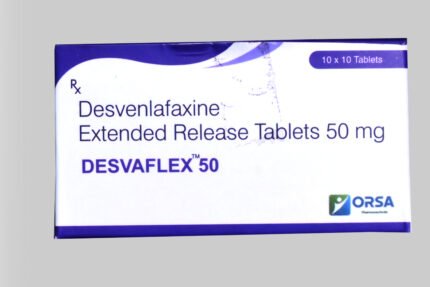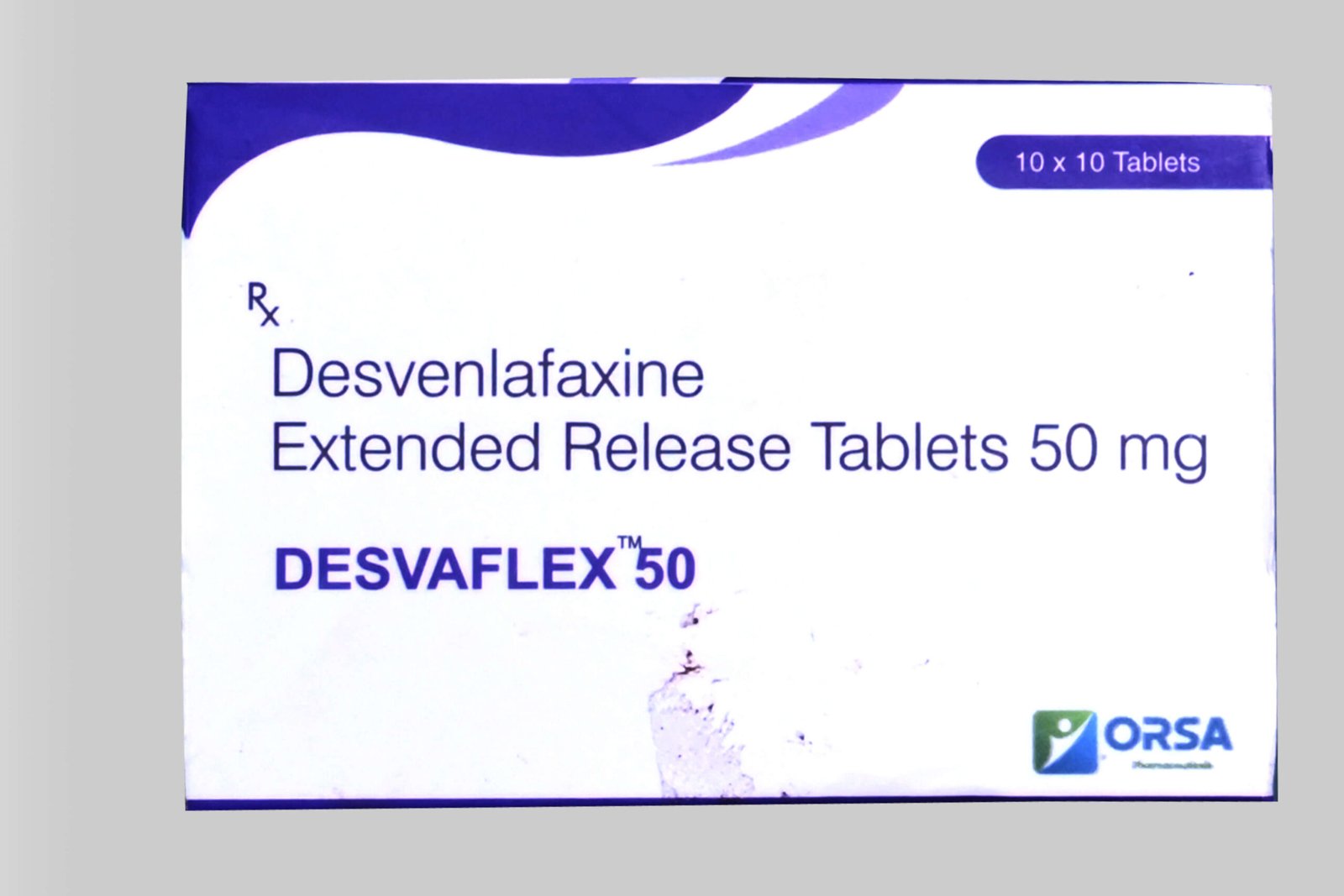
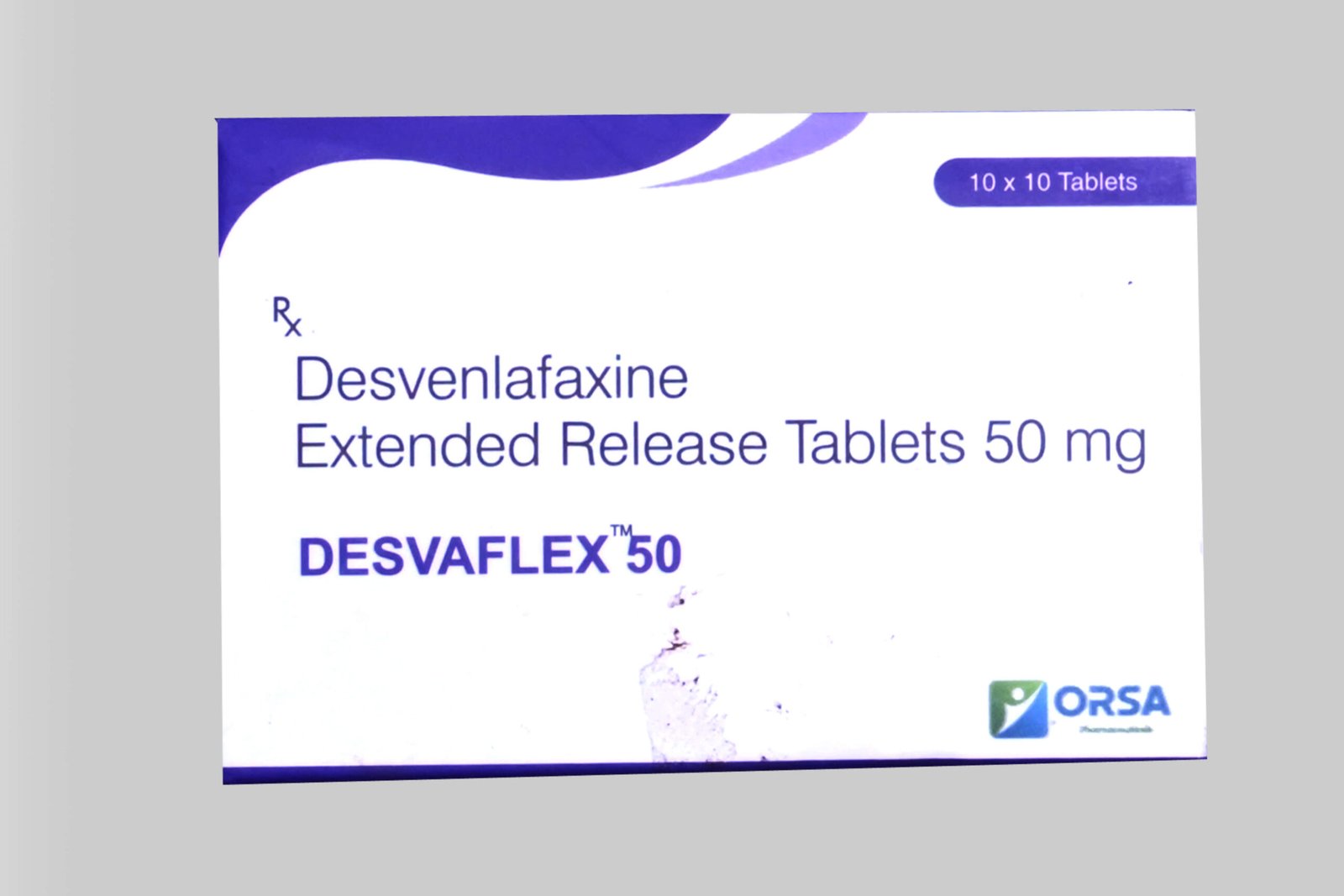
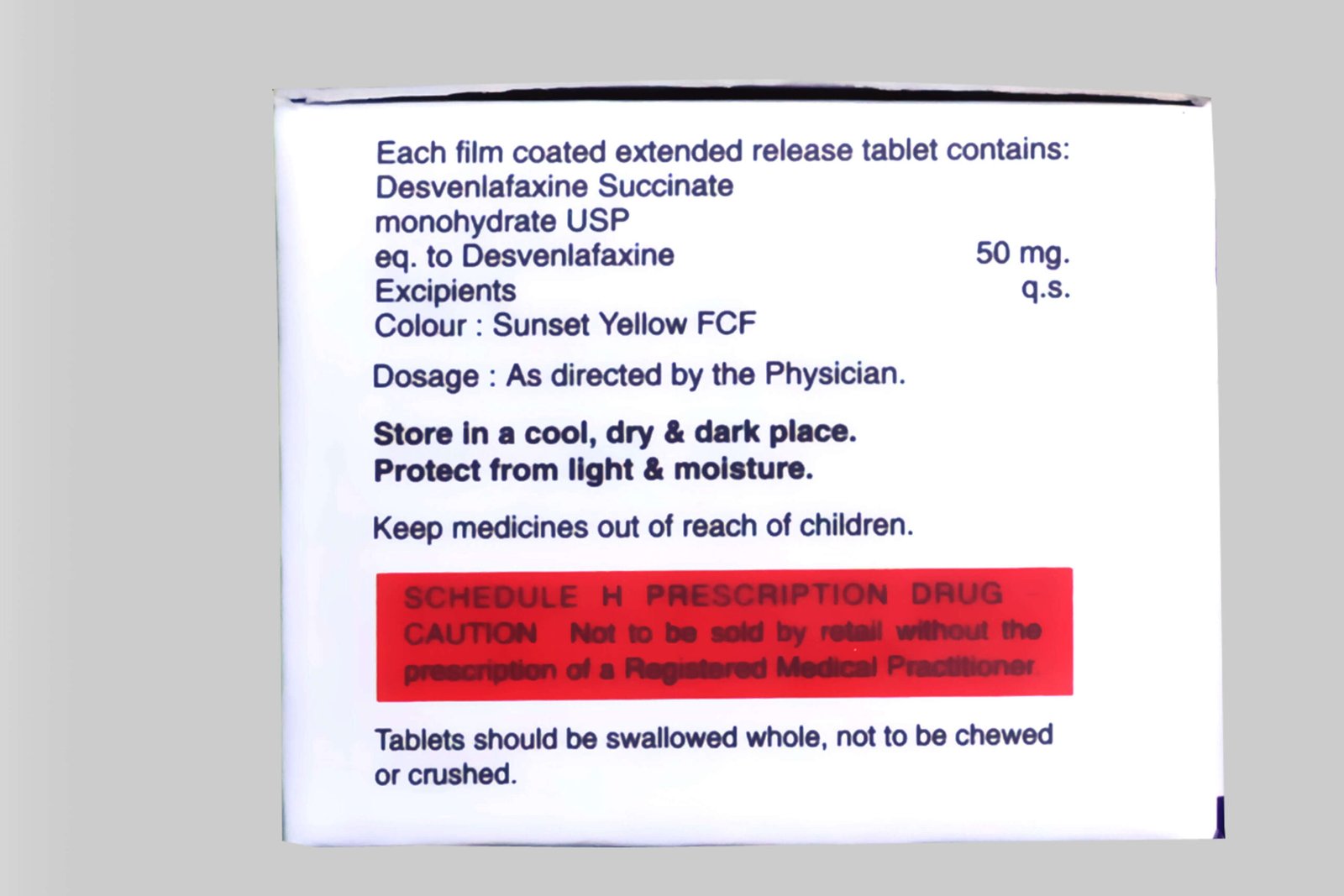

Desvaflex
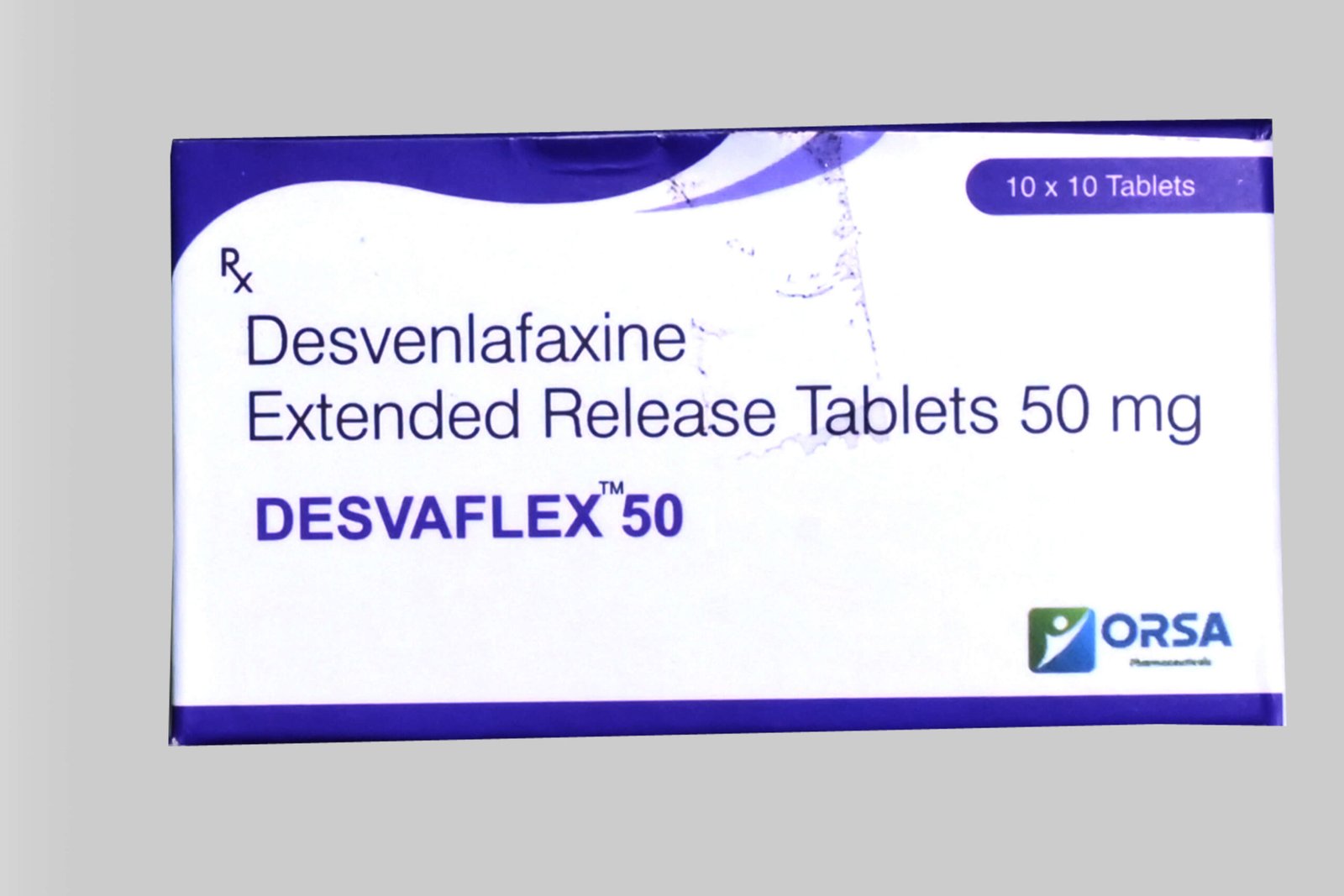
Desvaflex contains Desvenlafaxine, a serotonin-norepinephrine reuptake inhibitor (SNRI) used to treat major depressive disorder (MDD) and related mood disorders. By increasing levels of serotonin and norepinephrine in the brain, it helps restore emotional balance and improve mood, energy levels, and focus.
Desvaflex is often preferred for patients who do not respond adequately to SSRIs or who have additional symptoms such as fatigue, anxiety, or lack of motivation.
| Composition |
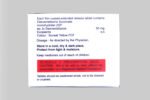
Desvenlafaxine – 50 mg / 100 mg |
|---|---|
| Form |
Tablet |
Description
Key Benefits:
• Effective treatment for moderate to severe depression
• Enhances mood, motivation, and emotional resilience
• Reduces anxiety, irritability, and cognitive symptoms
• Fewer sexual side effects compared to some other antidepressants
• May also help with menopausal vasomotor symptoms (off-label)
Directions for Use:
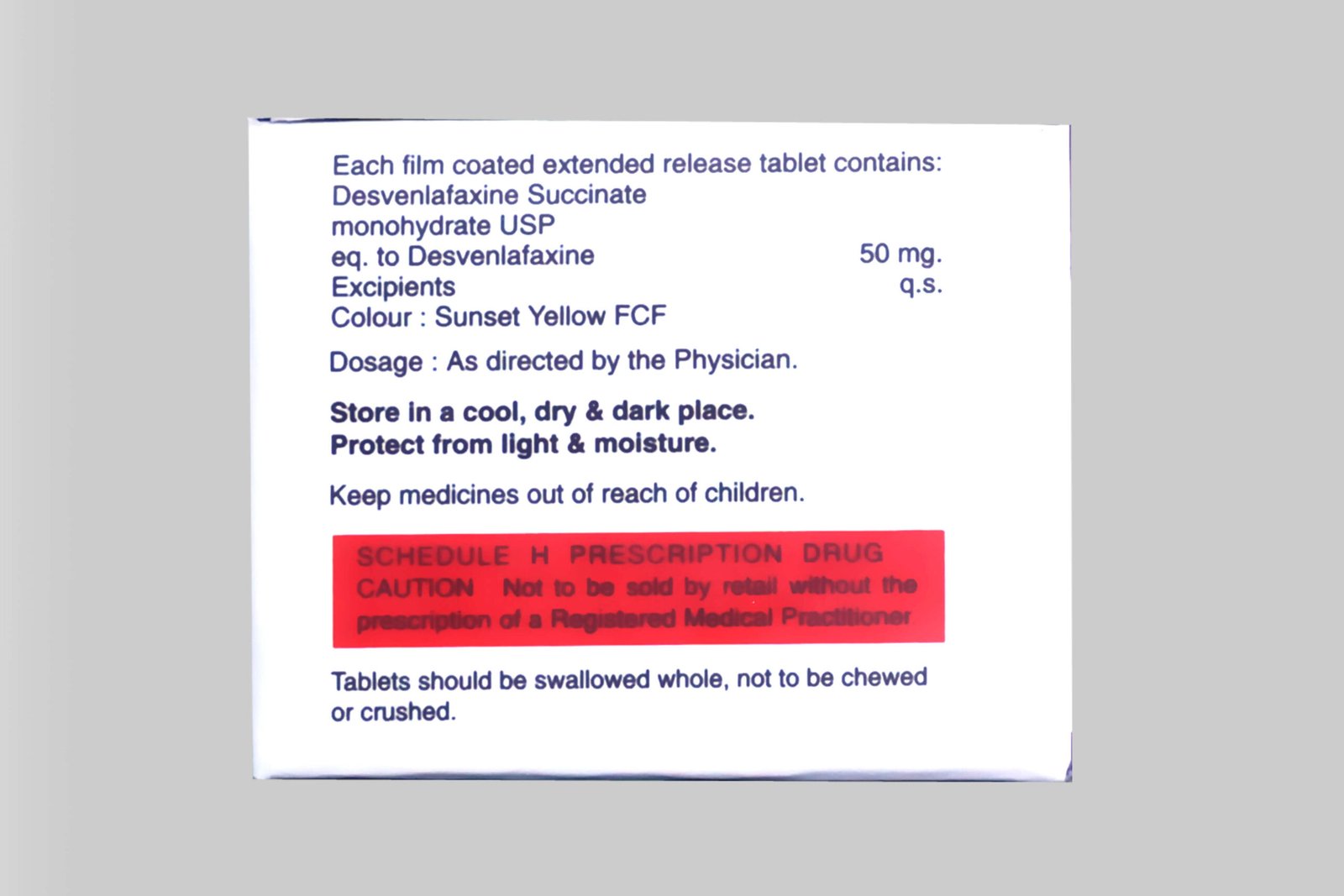
Take one tablet daily, preferably at the same time each day, with or without food, or as prescribed by your psychiatrist. Do not crush or chew extended-release tablets.
Storage:
Store in a cool, dry place below 25°C. Keep away from moisture and light.
Adverse Effects
Desvaflex (Desvenlafaxine) is an SNRI antidepressant used to treat major depressive disorder. While effective and generally well tolerated, it may cause side effects, especially during the initial phase of treatment or with dose adjustments.
Major Side Effects (Seek immediate medical attention if any of these occur):
• Suicidal thoughts or behavior, especially in young adults
• Serotonin syndrome (confusion, agitation, fever, muscle stiffness, irregular heartbeat)
• Hypertension or increased blood pressure
• Seizures
• Abnormal bleeding or bruising (especially if taken with NSAIDs or blood thinners)
• Liver function abnormalities (jaundice, dark urine, upper abdominal pain)
• Severe allergic reaction (rash, hives, swelling of face/throat, difficulty breathing)
Minor Side Effects (Usually mild and self-limiting):
• Nausea or upset stomach
• Headache
• Dizziness or light-headedness
• Dry mouth
• Insomnia or sleep disturbances
• Sweating or hot flashes
• Constipation
• Decreased libido or sexual dysfunction
• Increased fatigue or drowsiness
Precautions:
• May take 1–2 weeks for noticeable effect; full benefits may take 4–6 weeks
• Do not stop abruptly; tapering is advised to avoid withdrawal symptoms
• Monitor for increased suicidal thoughts in early weeks of treatment, especially in young adults
• Use with caution in patients with hypertension or seizure disorders
• Avoid alcohol and other CNS depressants